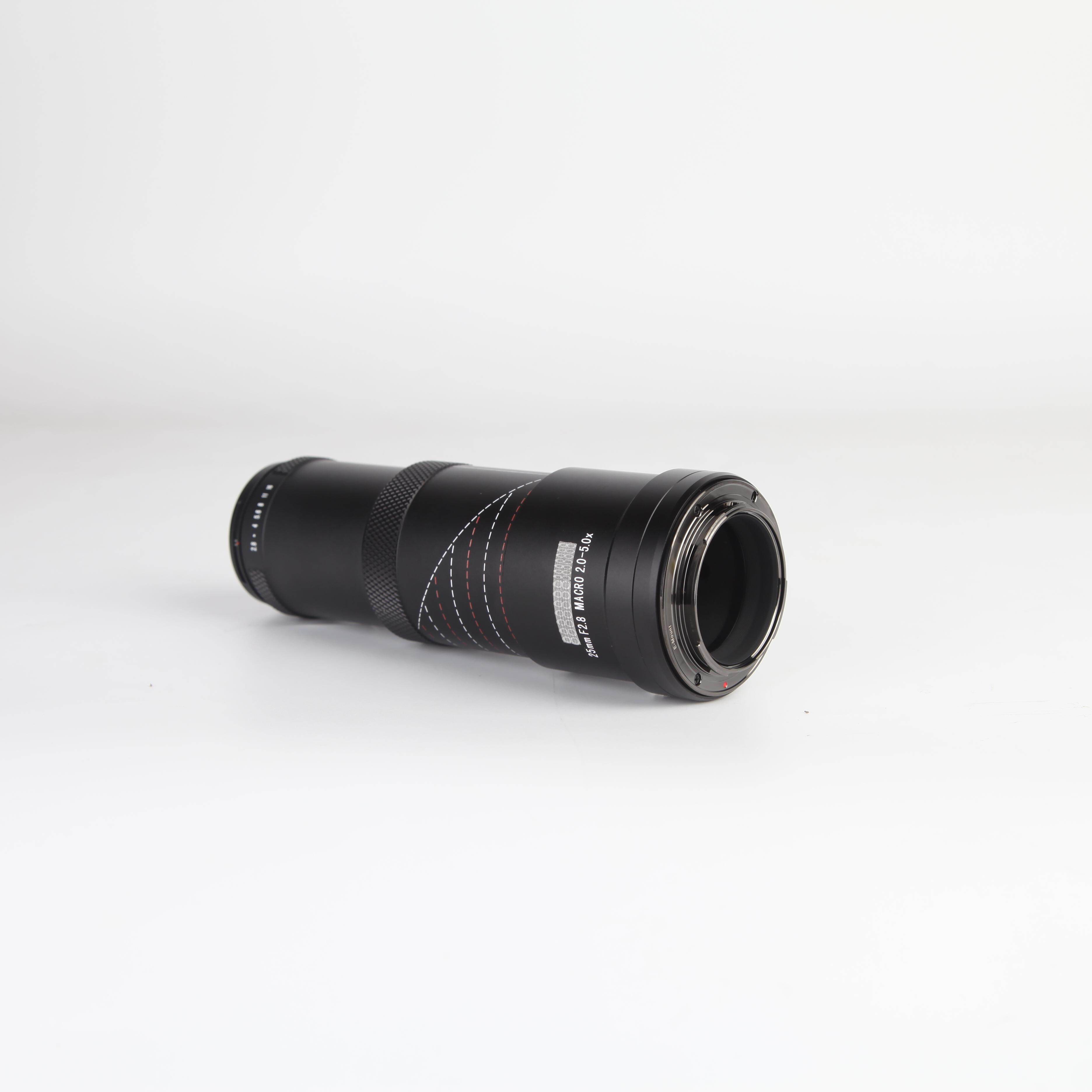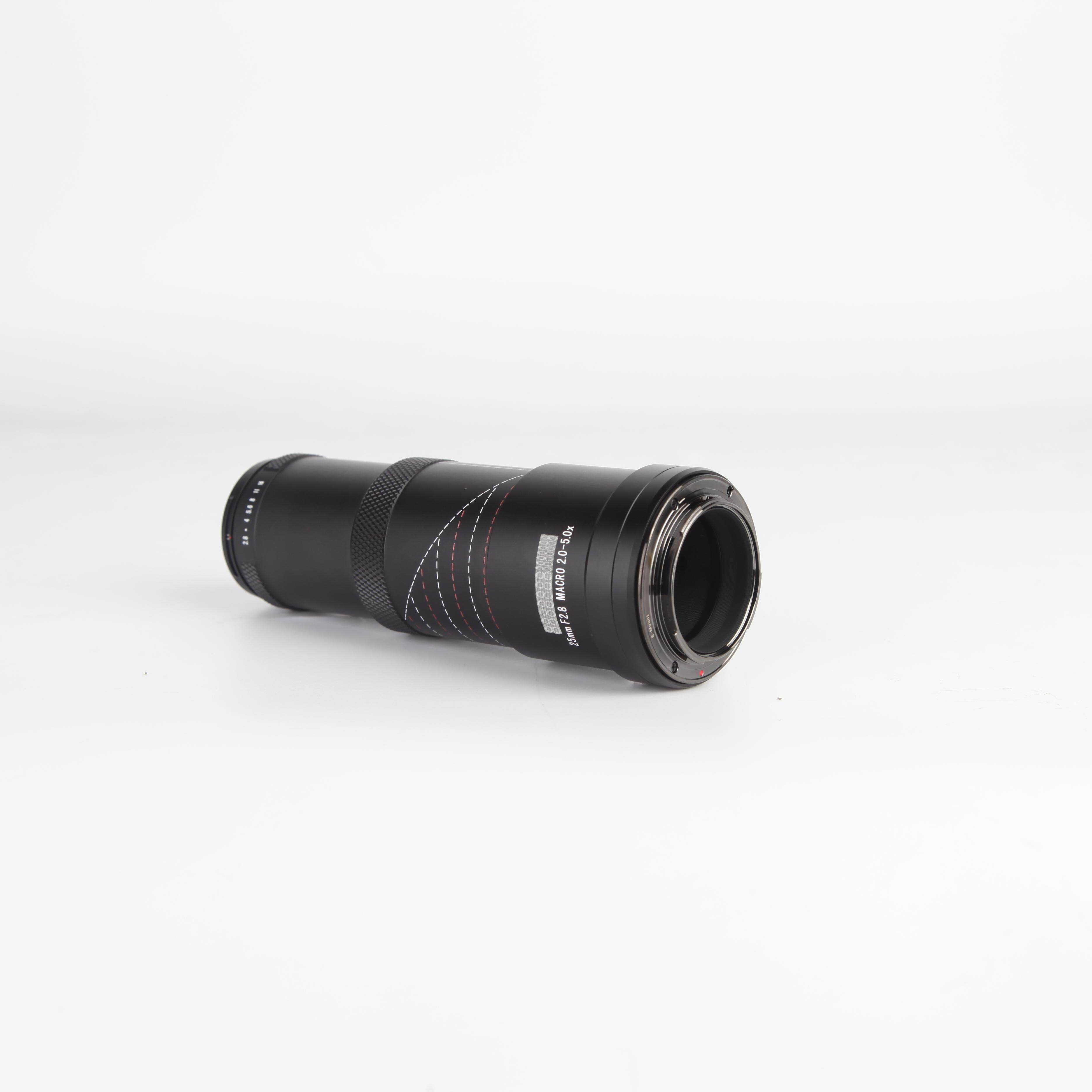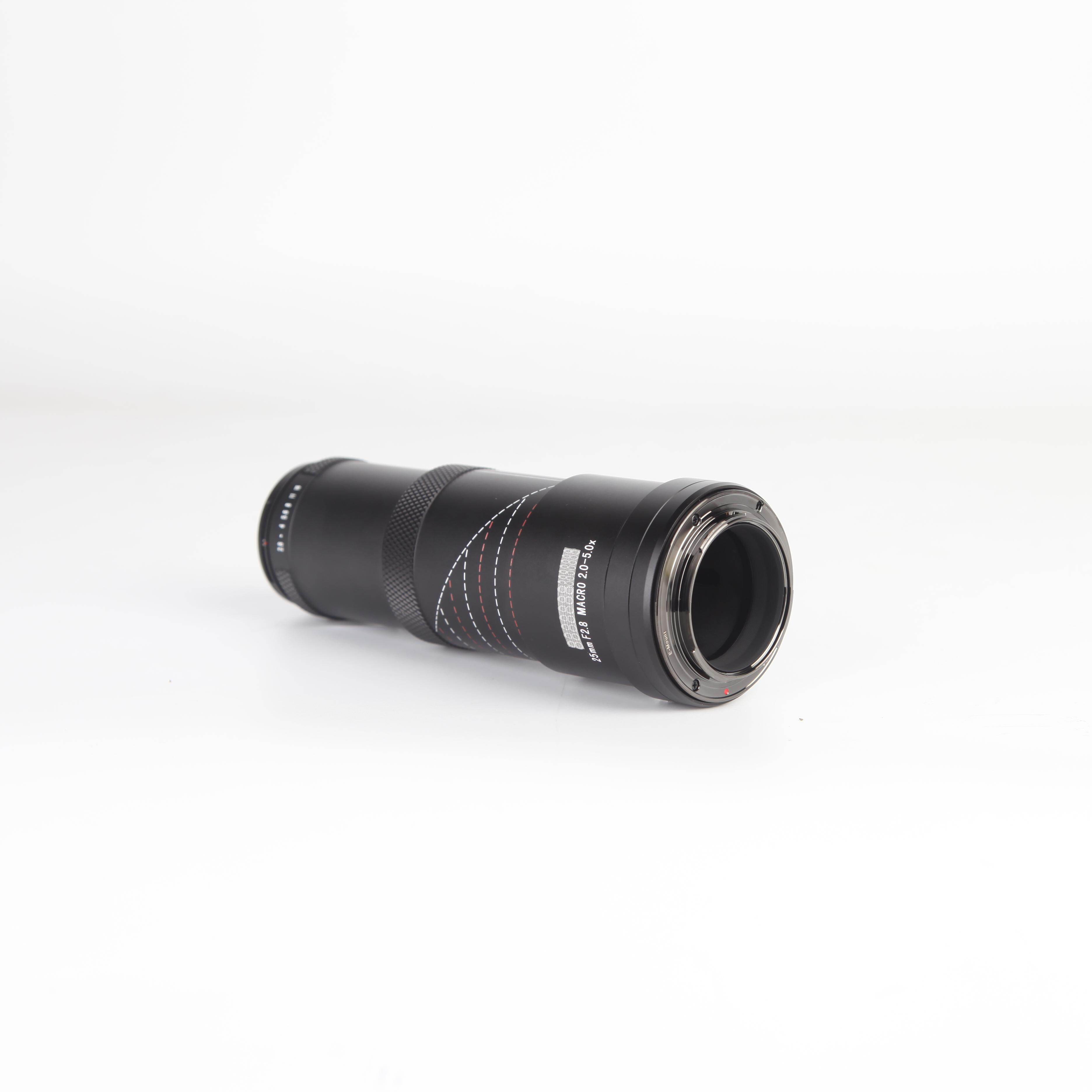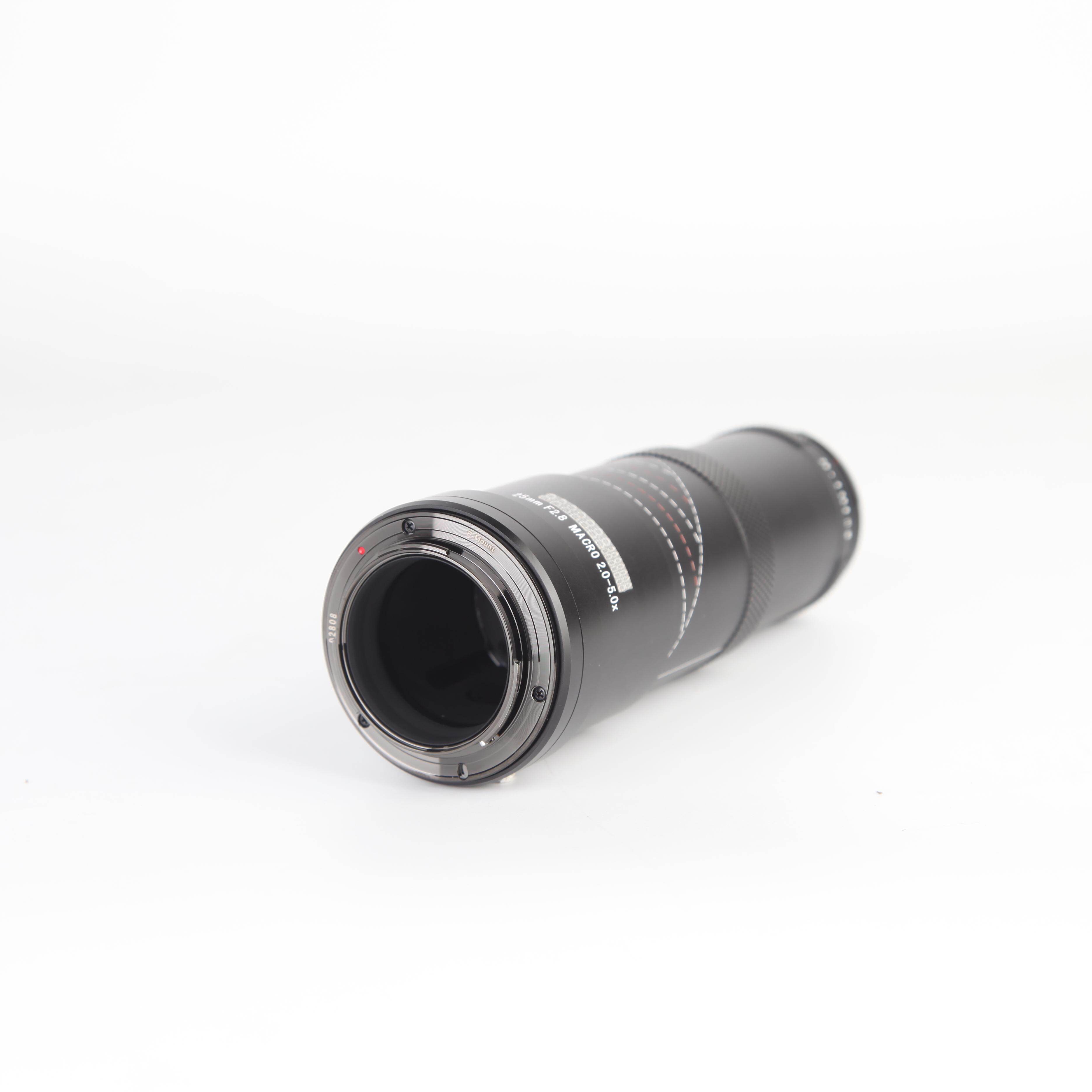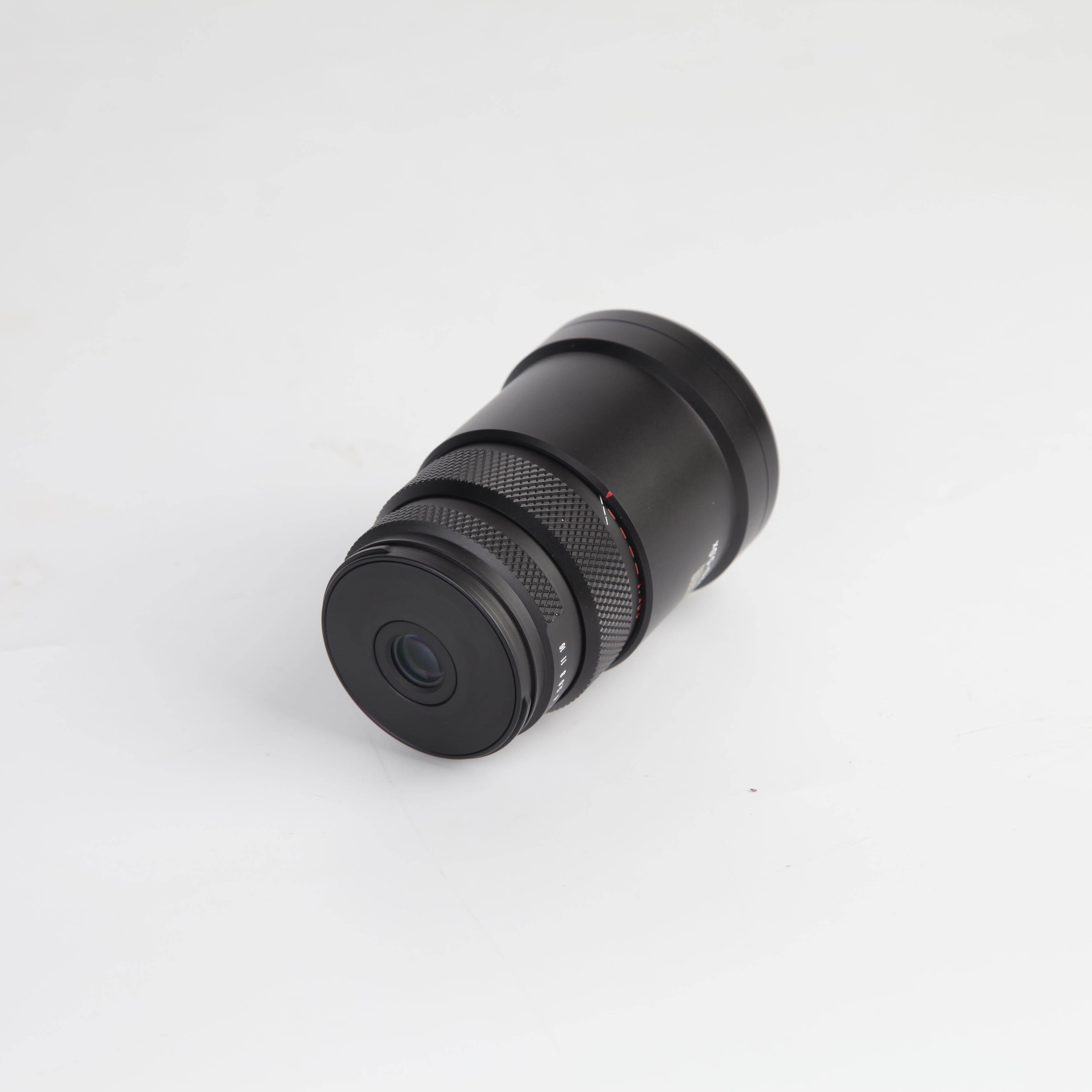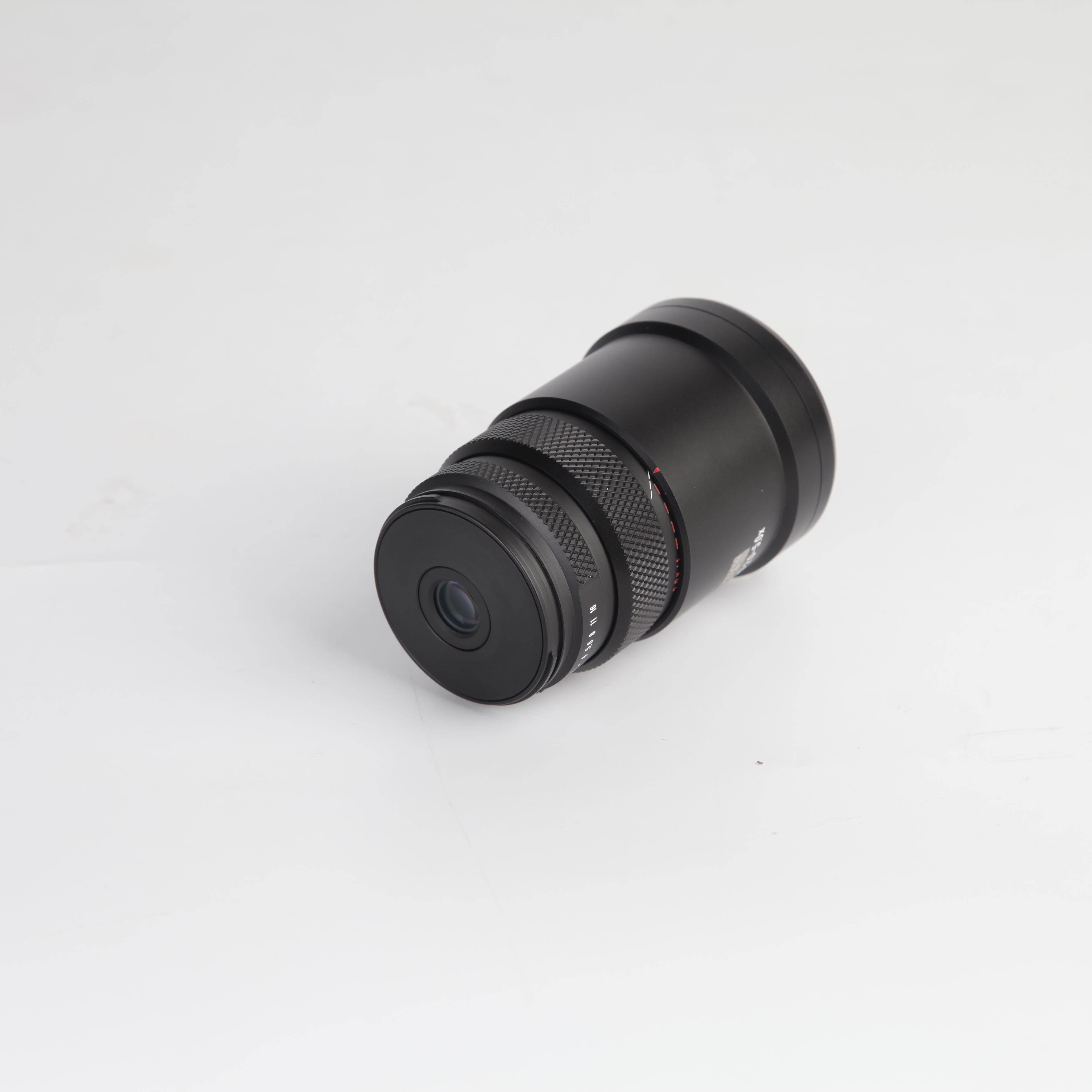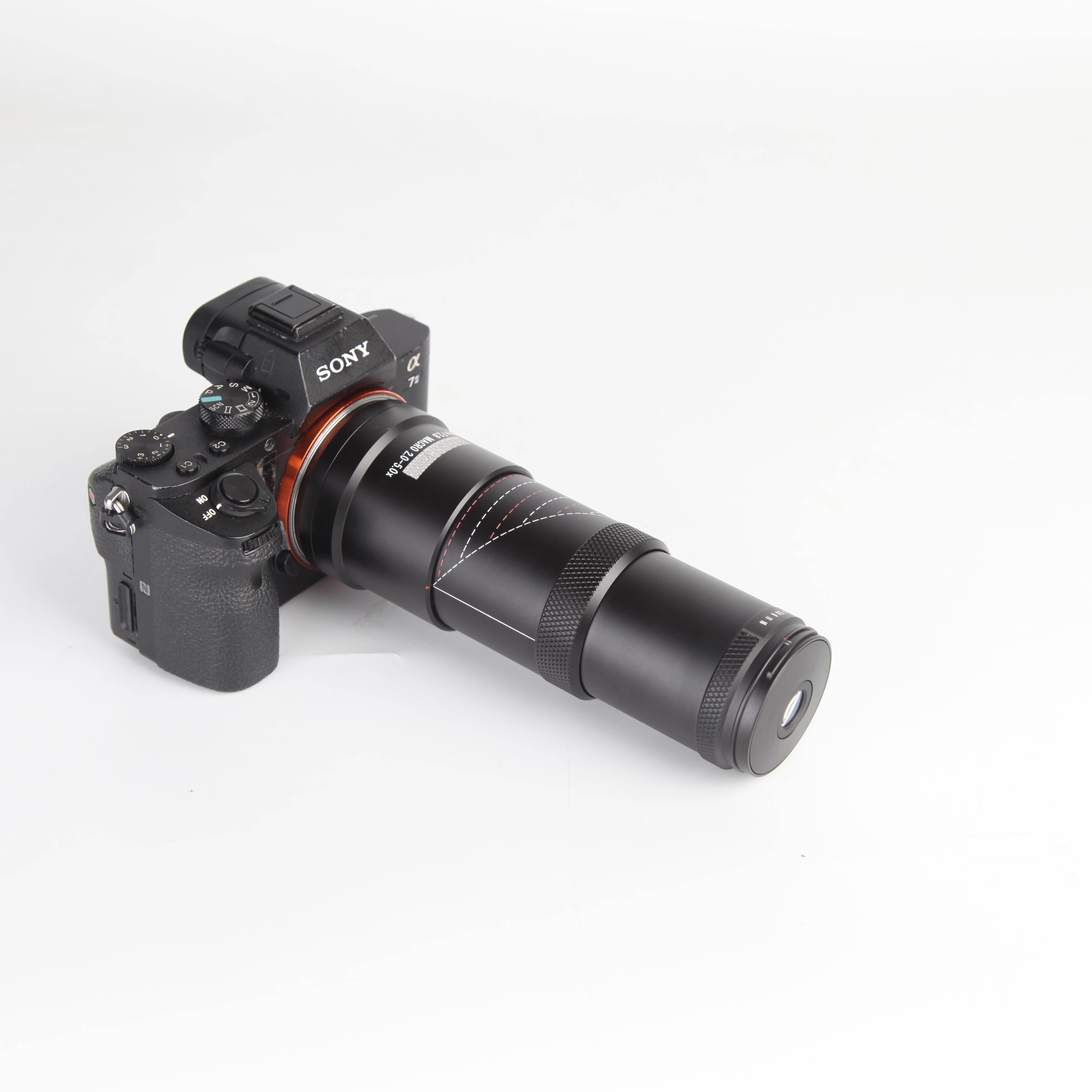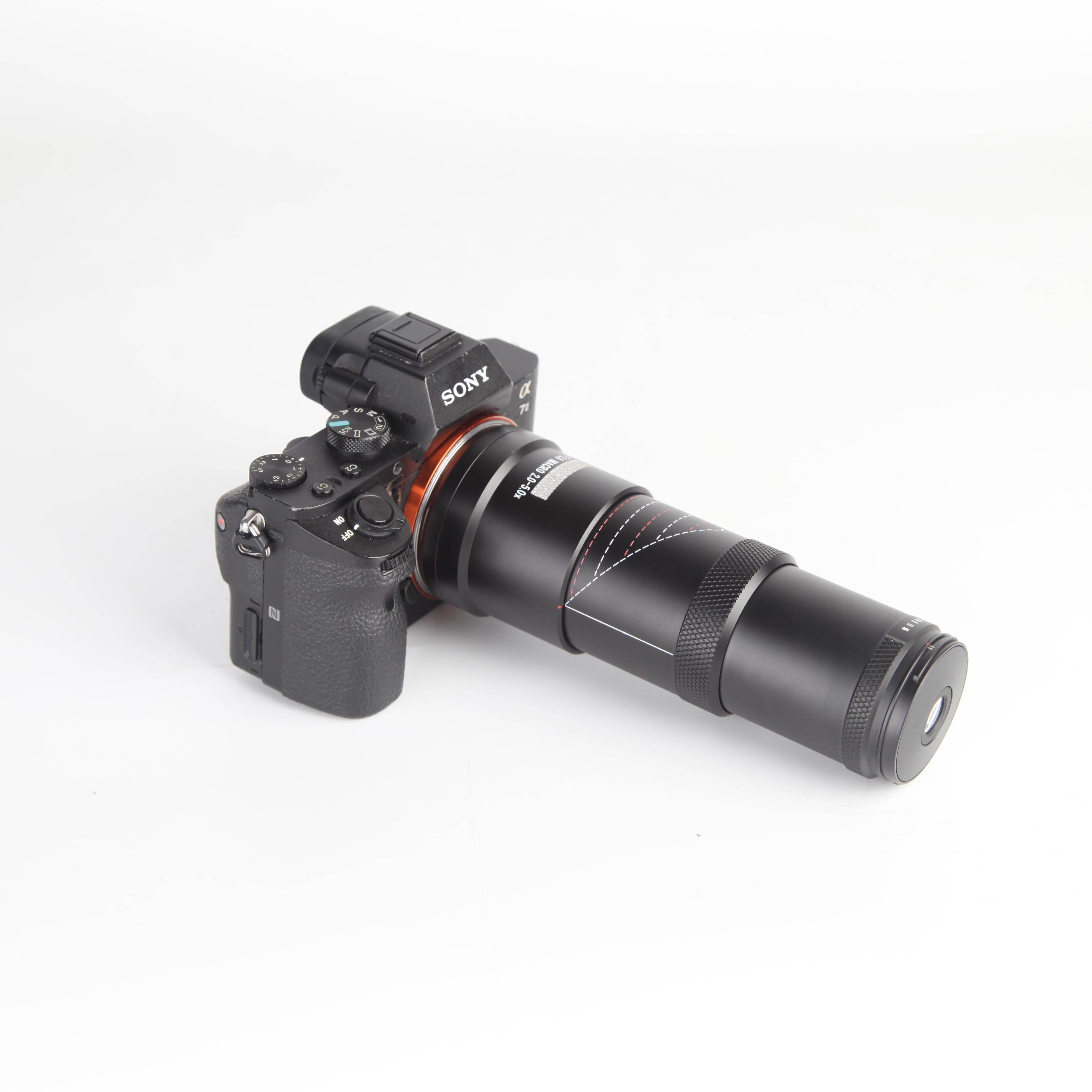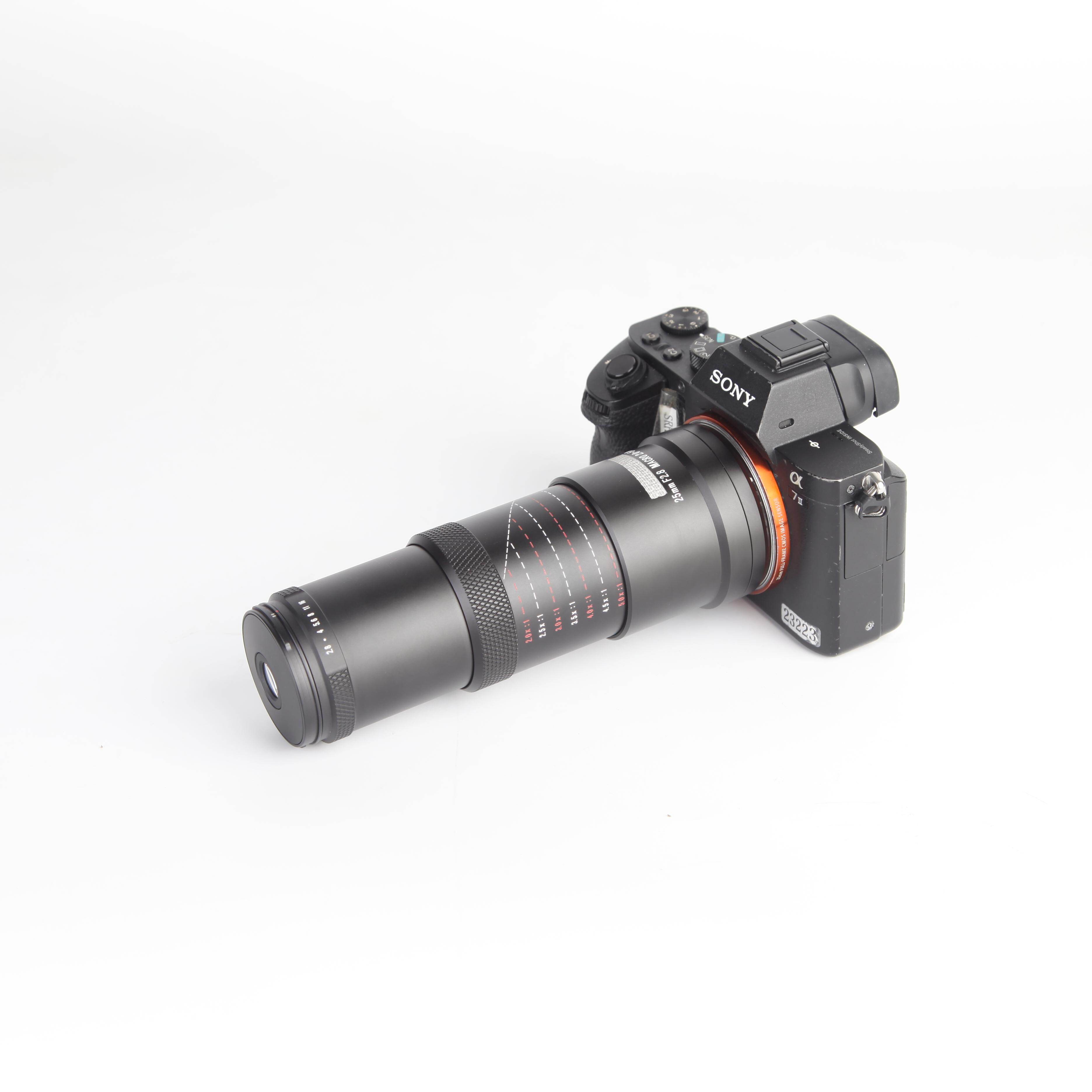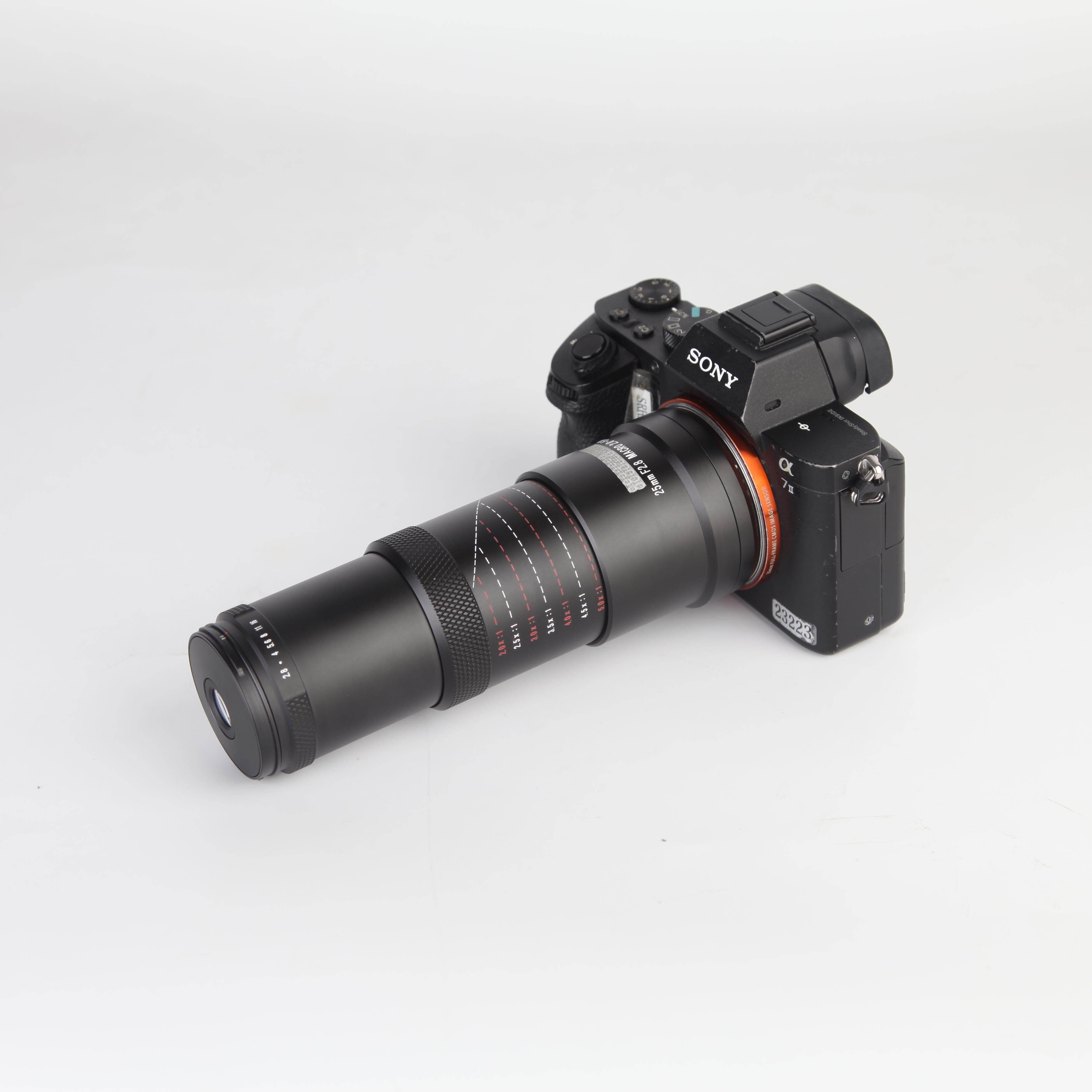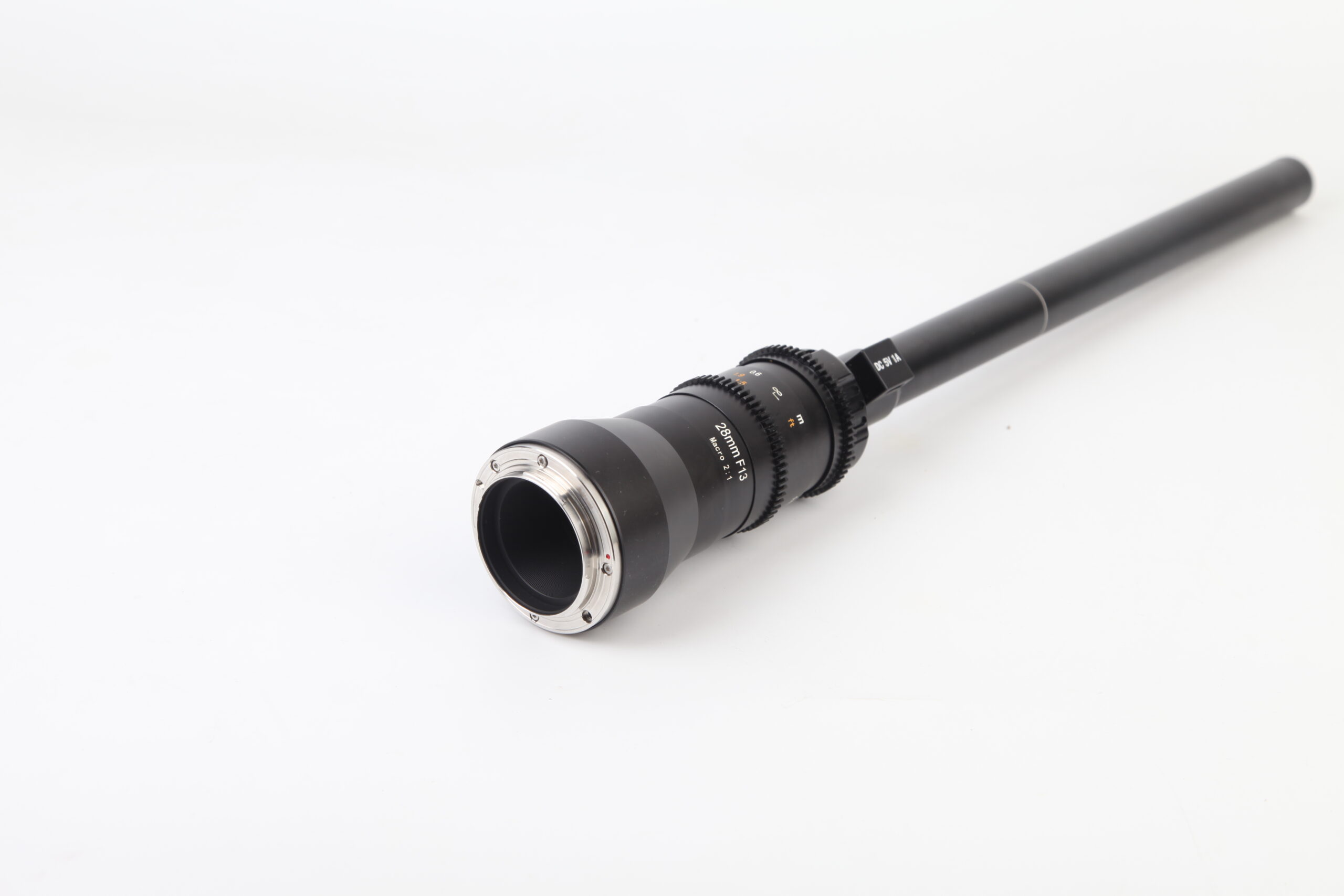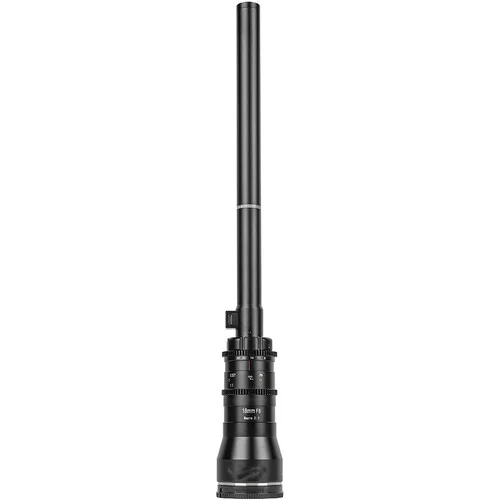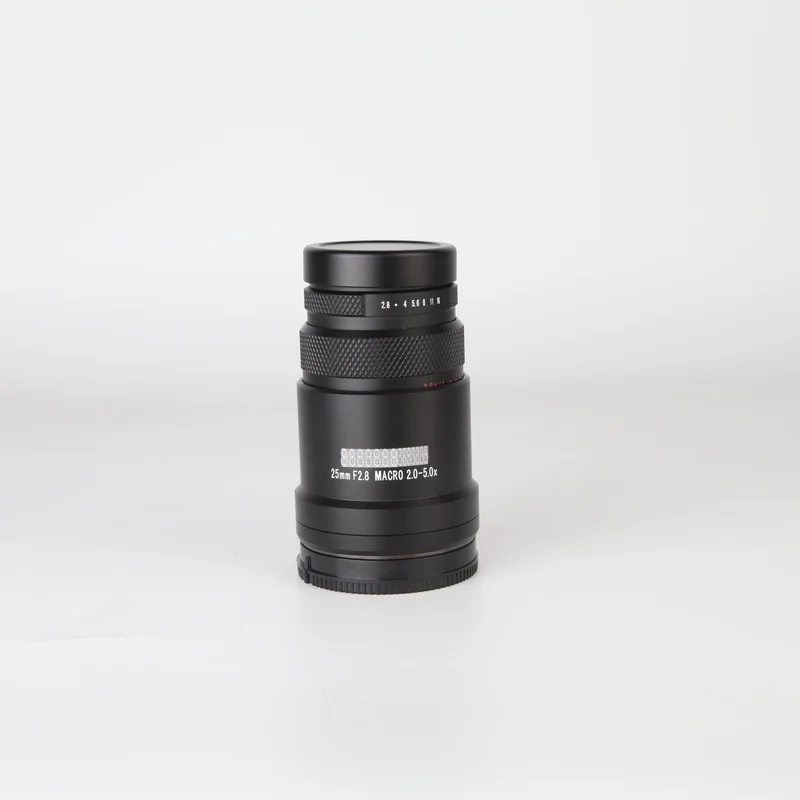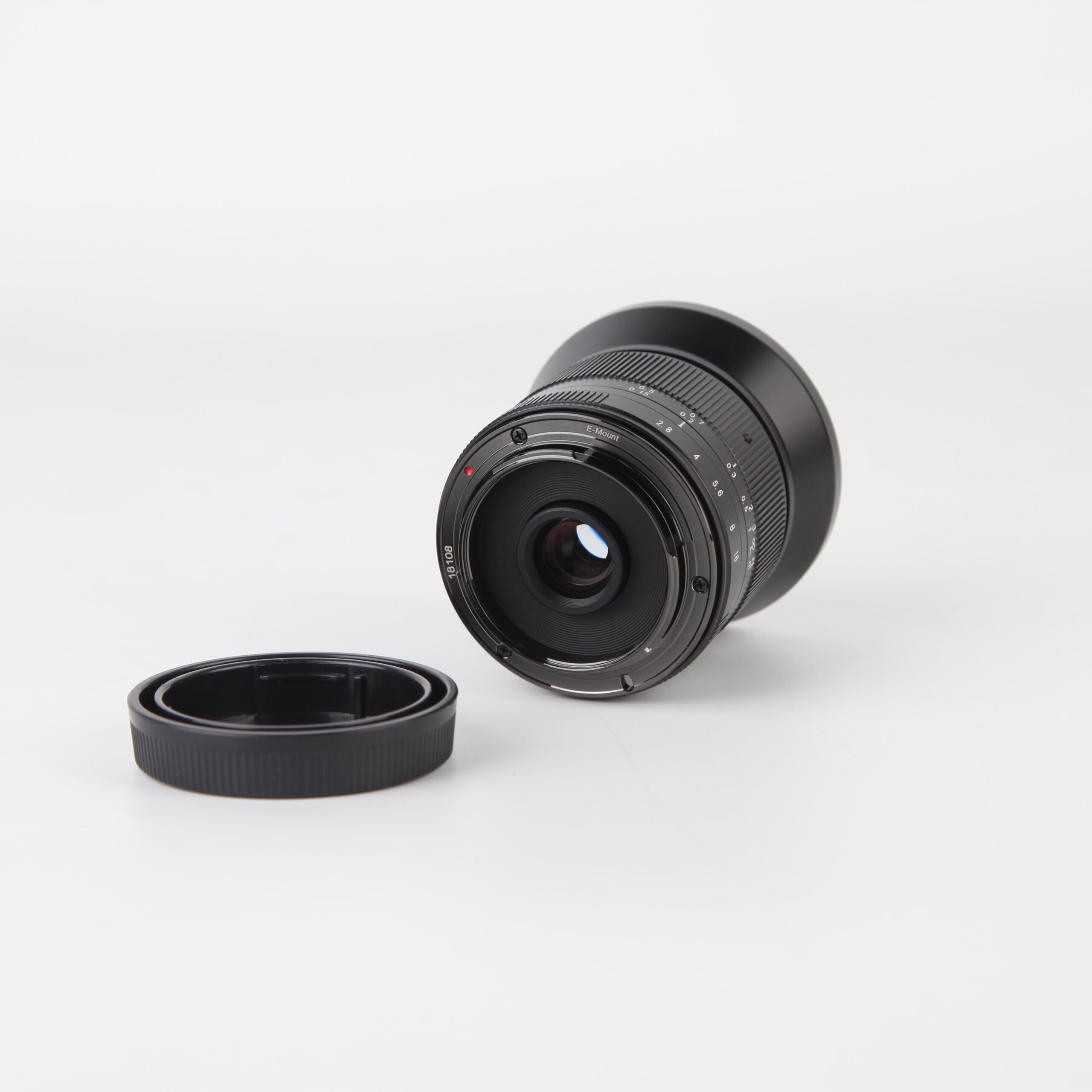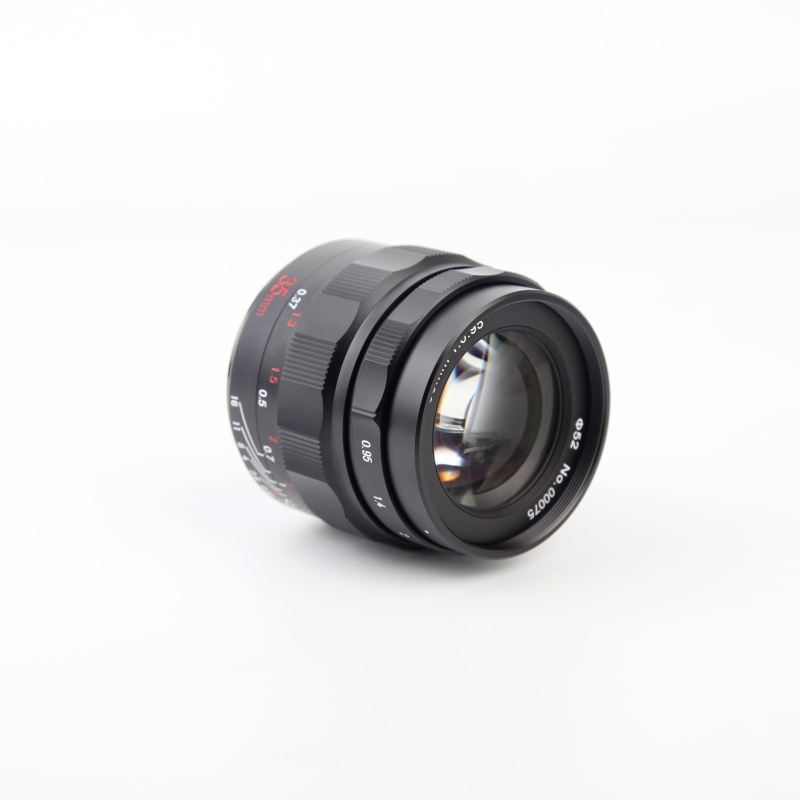
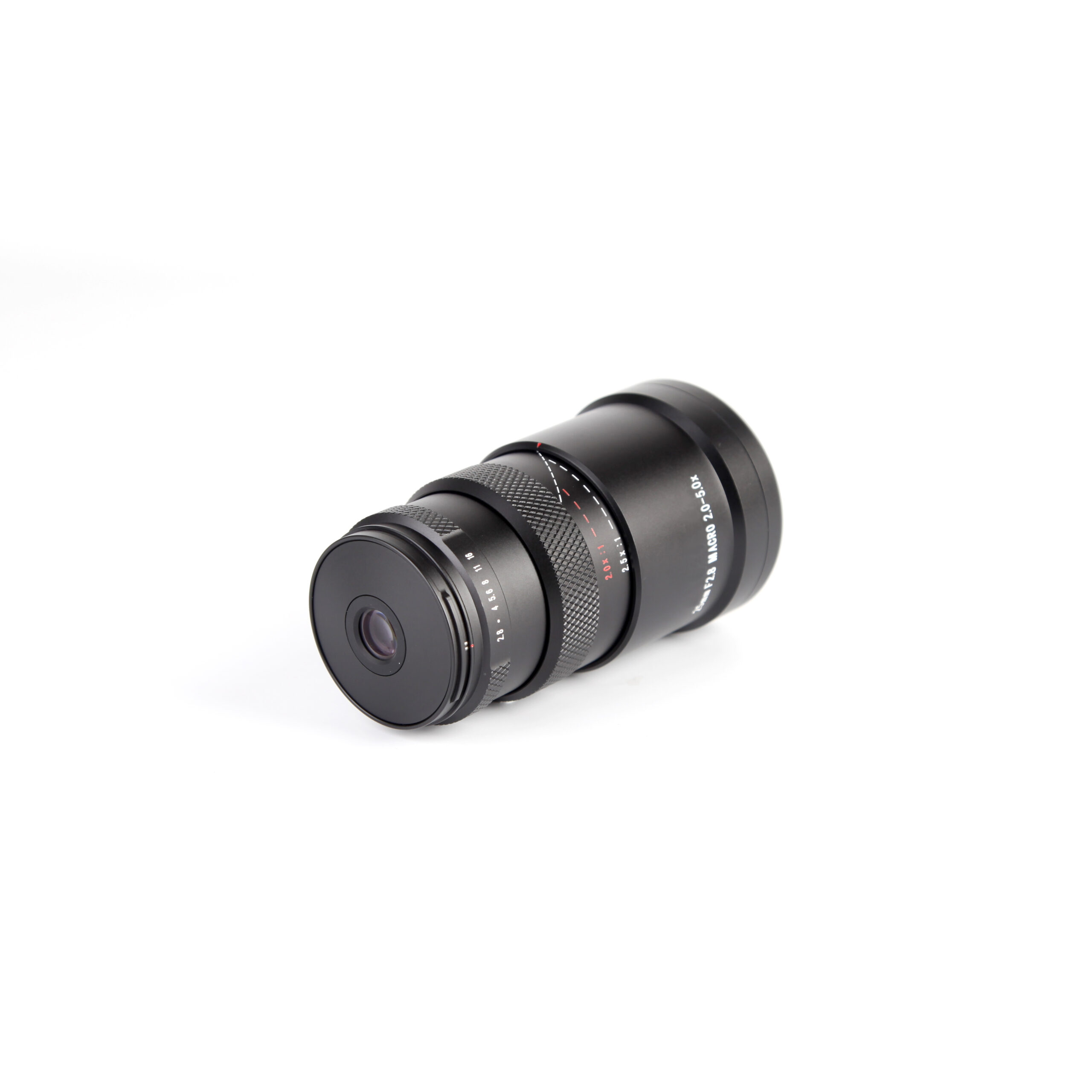
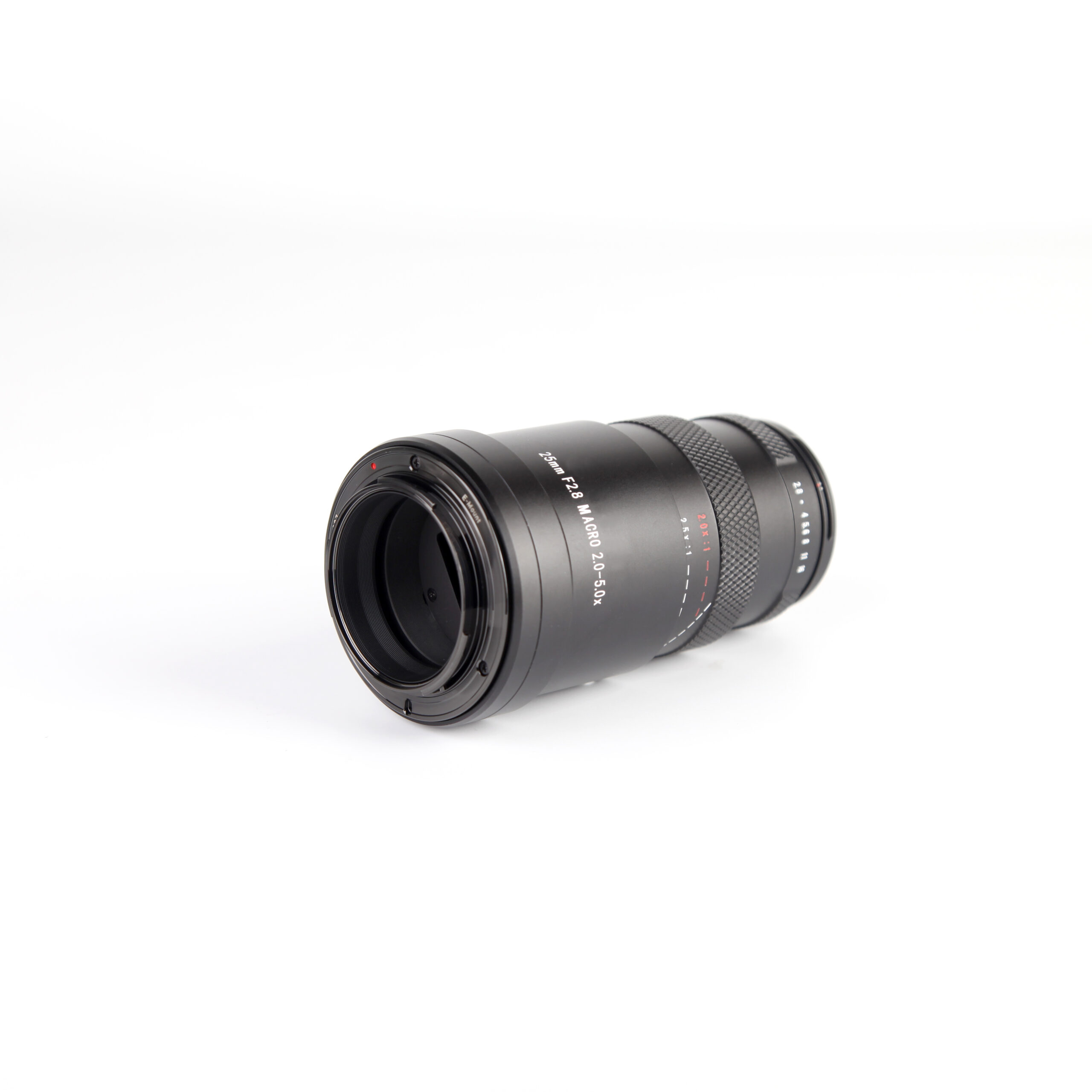
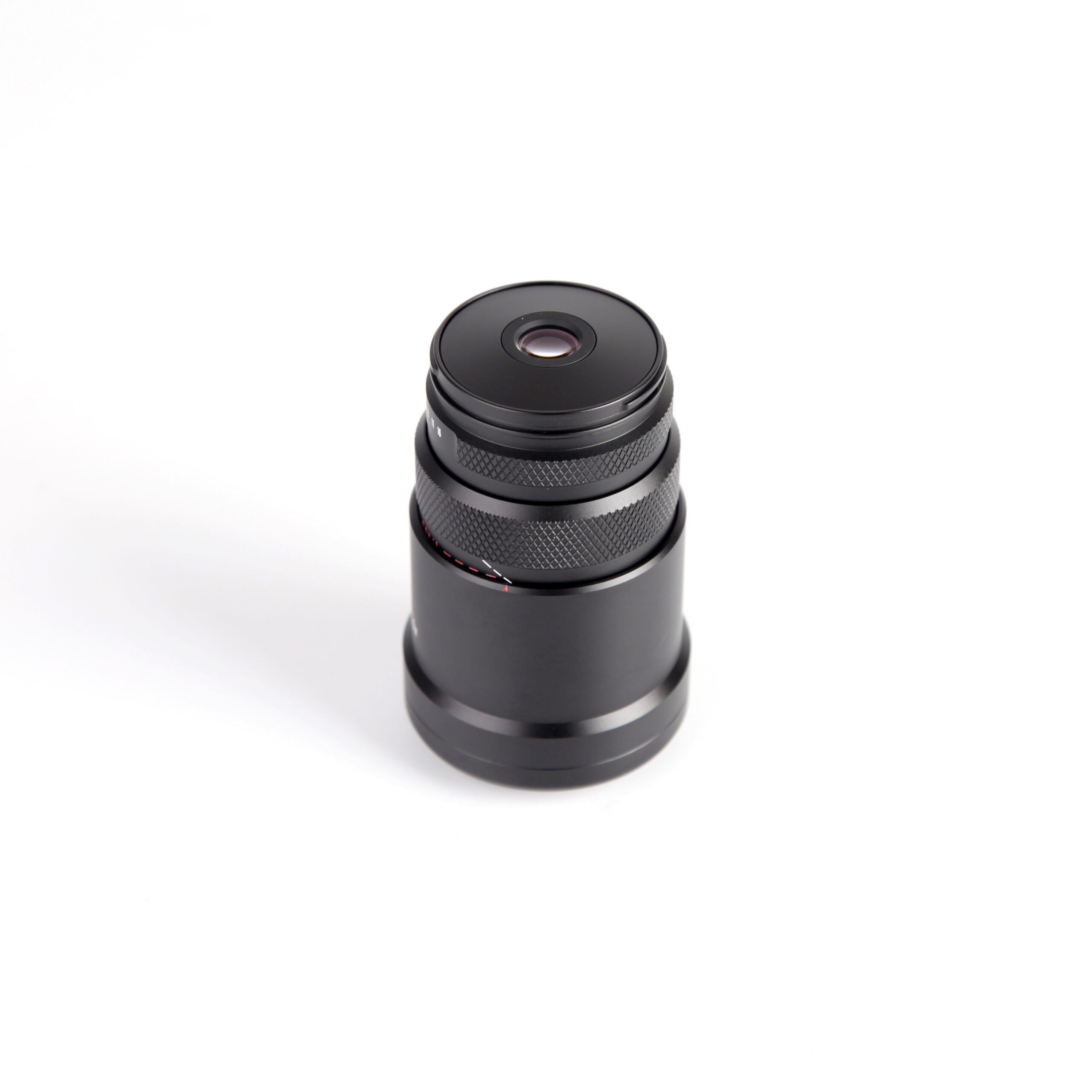
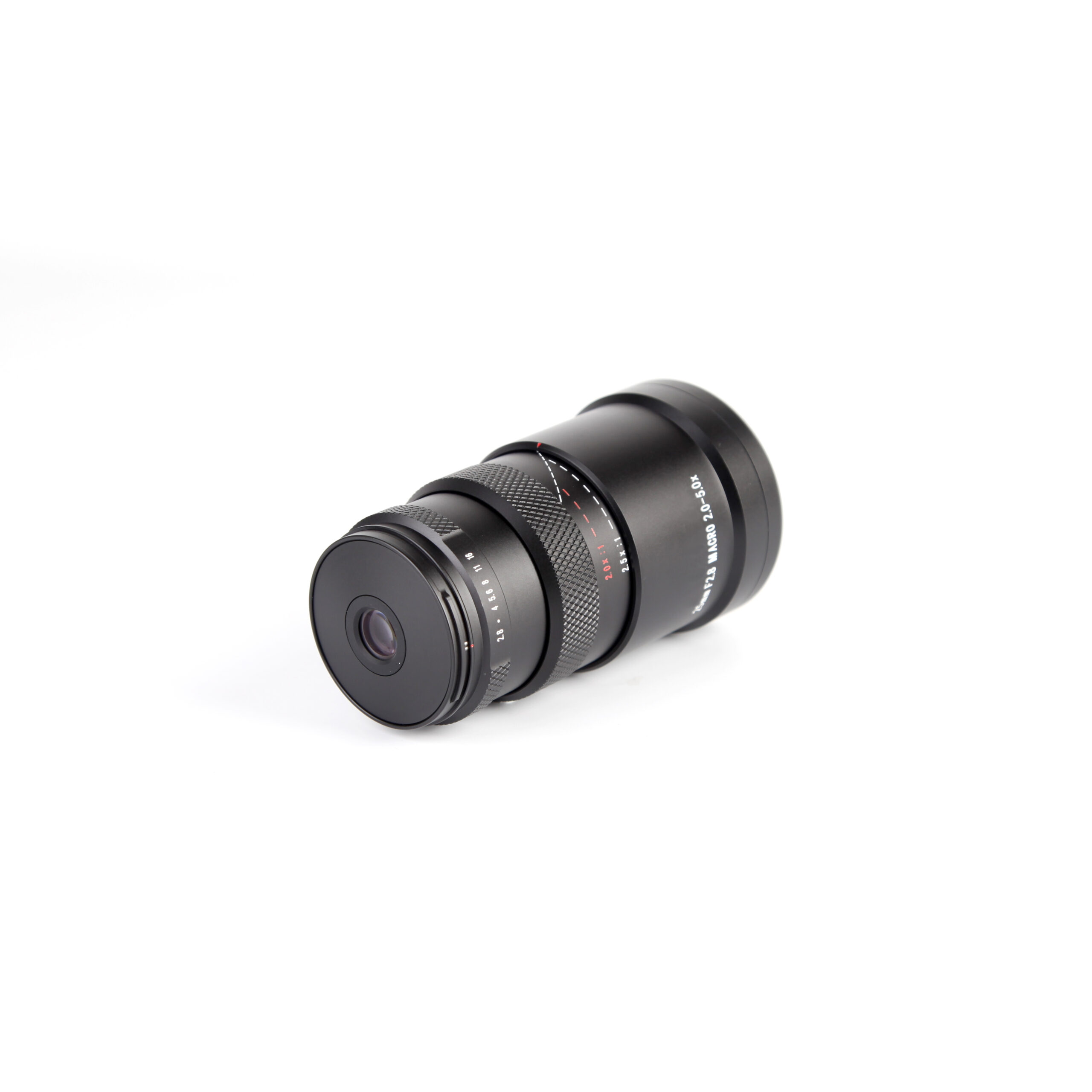
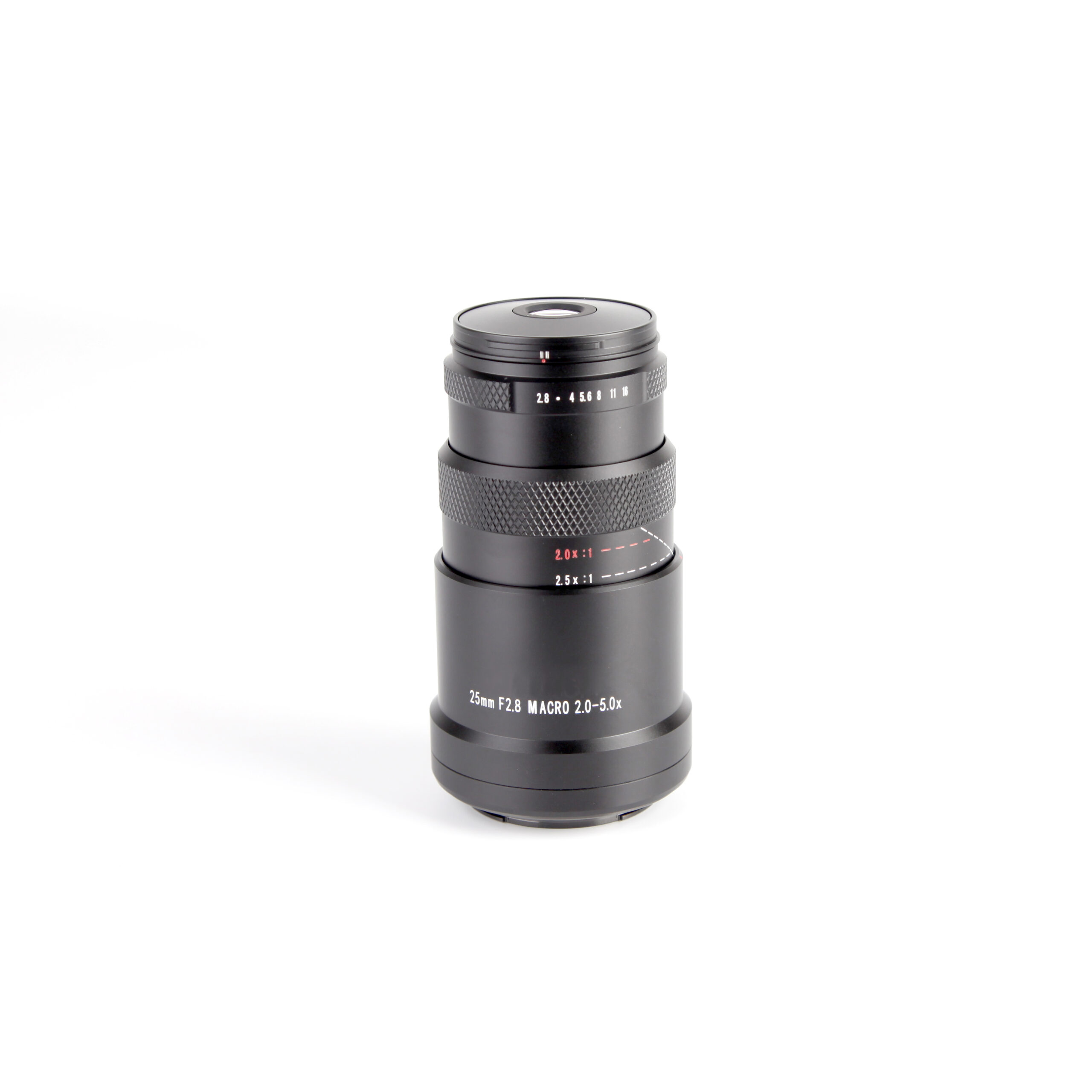
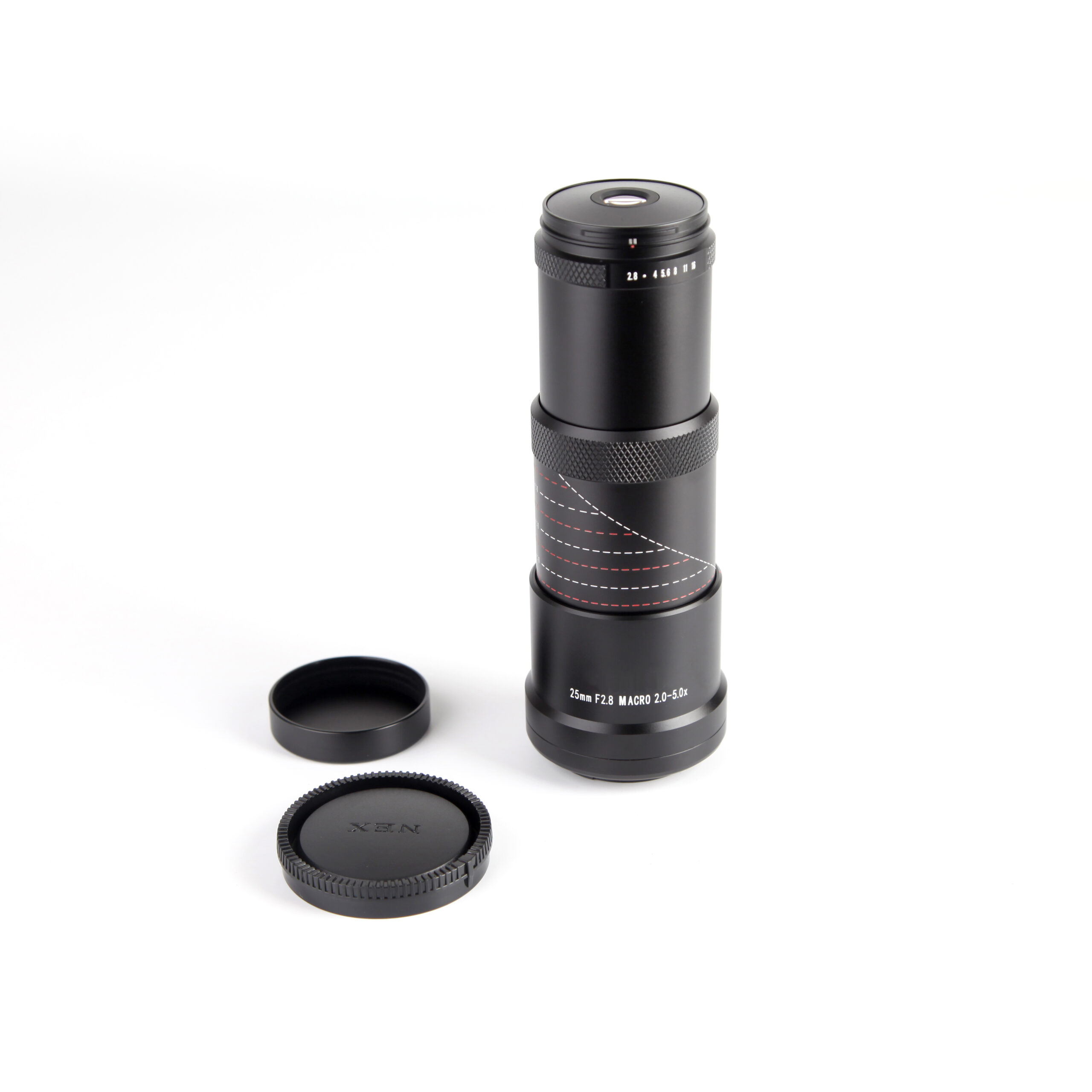
With a magnification of up to 5 times, 25mm offers a wider depth of field, a longer light diffusion distance, and a high-definition macro experience. A super macro lens developed for full-frame systems, which can magnify the object being filmed by approximately 2.5 to 5 times. It is better than ordinary macro lenses at capturing the distinctive microscopic world.
Designed exclusively for Sony E-mount cameras, this 25mm digital camera lens stands out with its adjustable 2x-5x magnification, full-frame compatibility, and excellent optical performance. Tailored for scenarios requiring precise close-range imaging, it balances clarity, versatility, and user control, making it a reliable tool for professional and enthusiast photographers alike. Below is a detailed breakdown of its key specifications and features:
1. Core Optical Performance
Key Optical Parameters
- Focal Length: Fixed 25mm, providing a stable base for consistent framing across different magnification levels.
- Magnification Range: 2x-5x adjustable, enabling flexible switching between moderate and high close-up imaging—ideal for capturing fine details in subjects like small objects, electronic components, or biological samples.
- Image Format: Full-frame, ensuring no cropping of the sensor’s full area. It maximizes the camera’s imaging potential, delivering wide-field or detailed shots without compromising resolution.
- Working Wavelength: 436-656nm, covering a broad segment of the visible light spectrum. This ensures accurate color reproduction and clear imaging across most natural and artificial light environments.
- Distortion: 0.88%-0.23%, an extremely low distortion range. It minimizes image deformation, especially critical for close-up shots where maintaining the subject’s true shape (e.g., geometric parts, tiny structures) is essential.
- Relative Illumination: >0.45, guaranteeing uniform light distribution across the entire image plane. There is no obvious brightness difference between the center and edges, avoiding dark corners and ensuring consistent image quality.
2. Mechanical & Operational Features
Compatibility & Control
- Mount Type: Sony E-mount, specifically designed to fit Sony E-mount full-frame cameras. It ensures seamless integration, stable signal transmission, and reliable mounting.
- Aperture Performance:
- Aperture Range: F/2.1~16, with a numerical aperture (NA) of 0.1. The bright F/2.1 maximum aperture allows more light to enter, supporting low-light close-up shooting, while the F/16 minimum aperture enhances depth of field for sharpness across the entire subject.
- Aperture Blades: 8 blades, which form a near-circular aperture. This creates soft, natural bokeh (background blur) when using wider apertures, and maintains even light reduction when stopping down.
- Focusing:
- Focusing Mode: Manual focus (Manual), offering precise control over the focus point—critical for close-up photography where pinpoint focus on tiny details is required.
- Focusing Range: 37.5mm~45mm (object distance), specialized for close-range imaging. It allows users to get extremely close to subjects to capture micro-details that standard lenses cannot reach.
- Zoom Function: Not applicable (/), as the lens achieves magnification adjustment through its fixed optical design (2x-5x) rather than traditional zoom, ensuring stable optical performance at each magnification level.
- Optical Structure: 10 elements in 7 groups. This optimized lens configuration effectively reduces optical aberrations (such as spherical aberration, chromatic aberration, and coma), enhancing image sharpness, contrast, and clarity—even at the edges of the frame.
- Optical Total Length (TTL): 113mm, a compact design that balances optical performance with portability, making it easy to handle for extended shooting sessions.
- Optical Back Focal Length (B.F.L.): 40.5mm~115mm, a flexible range that accommodates different camera body designs and ensures proper spacing between the lens and sensor, avoiding vignetting or imaging errors.
3. Field of View (3:2 Aspect Ratio)
The lens offers a variable field of view (FOV) based on its magnification, adapting to different close-up framing needs:
- At 2x Magnification:
- Diagonal (D): 20°, Horizontal (H): 17.2°, Vertical (V): 11.6°
- Provides a moderately narrow FOV, suitable for capturing mid-range details (e.g., small mechanical parts, plant cells).
- At 5x Magnification:
- Diagonal (D): 9.0°, Horizontal (H): 8.0°, Vertical (V): 4.3°
- Delivers a highly narrow FOV, ideal for ultra-close-up shots (e.g., circuit board traces, insect wings) where extreme detail is the focus.
4. Application Scenarios
Leveraging its 2x-5x magnification, full-frame compatibility, and low distortion, this lens excels in the following scenarios:
- Macro Photography: Capturing fine details of small subjects (e.g., jewelry, coins, microorganisms) with sharpness and true-to-life shape.
- Industrial Inspection: Inspecting tiny components (e.g., electronic chips, precision gears) for defects or quality control.
- Scientific Imaging: Supporting educational or research work (e.g., biological slide observation, material structure analysis) with accurate light transmission and low distortion.
- Creative Close-Up Shots: For enthusiasts, it enables unique creative expressions—such as capturing texture in fabrics, dewdrops on leaves, or small-scale artistic details.
With its tailored design for Sony E-mount cameras, flexible magnification, and reliable optical performance, this 25mm lens fills a key niche in close-up imaging, meeting the demands of both professional work and creative exploration.